


This Riverfront Has a Story to Tell
For generations, the Wabash River shaped life in Terre Haute.
It carried trade and travelers through the early Midwest. It carved wetlands and floodplains that still support extraordinary wildlife today. It became the backdrop for festivals, recreation, and everyday life across the Wabash Valley.
The river has always been here.
But for many years, the riverfront itself has become distant, something that we drive past instead of a place we think to gather. Riverfront Terre Haute exists to change that. It is the shared front porch of the community.
A place where the river isn't just something we see but something we experience.

If the River Could Talk… It would tell the story of Indiana.
The Wabash flows nearly 500 miles across the state, touching seventy-three counties and connecting communities across the Midwest.
For centuries, the river served as a pathway for trade and exploration. Its name comes from the Native American word waapaahsiiki — often translated as “water over white stones.”
Today the river remains one of the most biologically diverse waterways in the United States, supporting hundreds of species of fish, birds, and wildlife.
But the Wabash has always been more than a river. It’s a witness to the region’s past. A gathering place for its people.
And now, a foundation for future growth.
MEET WALLY
Wally calls the Wabash River home. Like all river otters, he lives where water is clean, habitats are healthy, and the river is full of life.
He spends his days exploring the riverfront — from quiet wetlands to busy trailheads — always on the move and always discovering something new.
Around here, Wally helps point the way.

MEET WALLY
Wally calls the Wabash River home. Like all river otters, he lives where water is clean, habitats are healthy, and the river is full of life.
He spends his days exploring the riverfront — from quiet wetlands to busy trailheads — always on the move and always discovering something new.
Around here, Wally helps point the way.

And when you see one soaring above the water, remember:
The eagle came back.
Now the community is returning too.
Have You Seen Them Soar?
Bald eagles can often be seen along the Wabash River corridor, especially near forested riverbanks and wetlands.
Look for them near Wabashiki Fish & Wildlife Area, forested riverbanks near Fairbanks Park, and wetland areas along the river corridor.
Bring binoculars. Take a walk along the trail. Keep your eyes on the treetops.* Best viewing times: Early morning or late afternoon.*

Wabashiki Fish & Wildlife Area

Forested riverbanks near Fairbanks Park

Wetland areas along the river corridor

What Their Return Tells Us
Today, bald eagles nest once again along the wetlands of the Wabash River corridor.
Eagles depend on places where ecosystems are healthy. Where fish thrive. Where wetlands remain intact. Where rivers still sustain life.
Seeing an eagle along the Wabash means... the river is recovering.
And it reminds us that the future of this landscape is worth protecting.

A National Comeback, Seen Locally
Across the country, the bald eagle has made one of America’s great conservation comebacks.
After falling to fewer than 500 known nesting pairs in the lower 48 states in the 1960s, bald eagles recovered through habitat protection, reintroduction efforts, and the banning of DDT.
Here along the Wabash, that national recovery has become local and visible.
The Return
When Wabash Riverscape was formed in 2006, bald eagles were just beginning to reappear along the Wabash River corridor after nearly a century of absence.
Their return did not happen by chance.
It took cleaner water, restored habitat, protected wetlands, and people who cared enough to fight for the river’s future.

The Disappearance
Not long ago, bald eagles nearly disappeared from much of the United States, and our stretch of riverfront was not spared.
For generations, seeing one in the wild was rare. In Vigo County, nesting pairs were so uncommon they could make news.
Then... something remarkable happened.
The Eagle Returns
High above the Wabash River, a bald eagle circles slowly over the water.
From that height, the whole story of Terre Haute unfolds below.
The river bends through wetlands and forests before reaching the parks, trails, and neighborhoods that line its banks. Rowers glide across the water. Cyclists follow the trail. Families gather along the riverfront as the sun sets.
The Eagle Returns
High above the Wabash River, a bald eagle circles slowly over the water.
From that height, the whole story of Terre Haute unfolds below.
The river bends through wetlands and forests before reaching the parks, trails, and neighborhoods that line its banks. Rowers glide across the water. Cyclists follow the trail. Families gather along the riverfront as the sun sets.
The Disappearance
Not long ago, bald eagles nearly disappeared from much of the United States, and our stretch of riverfront was not spared.
For generations, seeing one in the wild was rare. In Vigo County, nesting pairs were so uncommon they could make news.
Then... something remarkable happened.
The Return
When Wabash Riverscape was formed in 2006, bald eagles were just beginning to reappear along the Wabash River corridor after nearly a century of absence.
Their return did not happen by chance.
It took cleaner water, restored habitat, protected wetlands, and people who cared enough to fight for the river’s future.
A National Comeback, Seen Locally
Across the country, the bald eagle has made one of America’s great conservation comebacks.
After falling to fewer than 500 known nesting pairs in the lower 48 states in the 1960s, bald eagles recovered through habitat protection, reintroduction efforts, and the banning of DDT.
Here along the Wabash, that national recovery has become local and visible.
What Their Return Tells Us
Today, bald eagles nest once again along the wetlands of the Wabash River corridor.
Eagles depend on places where ecosystems are healthy. Where fish thrive. Where wetlands remain intact. Where rivers still sustain life.
Seeing an eagle along the Wabash means... the river is recovering.
And it reminds us that the future of this landscape is worth protecting.
Have You Seen Them Soar?
Bald eagles can often be seen along the Wabash River corridor, especially near forested riverbanks and wetlands.
Look for them near Wabashiki Fish & Wildlife Area, forested riverbanks near Fairbanks Park, and wetland areas along the river corridor.
Bring binoculars. Take a walk along the trail. Keep your eyes on the treetops.* Best viewing times: Early morning or late afternoon.*
Wabashiki Fish & Wildlife Area
Forested riverbanks near Fairbanks Park
Wetland areas along the river corridor
And when you see one soaring above the water, remember:
The eagle came back.
Now the community is returning too.

The River Is Calling People Back
For generations, the Wabash River shaped life in Terre Haute as it carried trade and travelers across the region.
It formed wetlands that still support incredible wildlife today and became the natural gathering place for the communities of people in the area.
Now it's our turn to return
Just like the eagle, Riverscape hopes to See You at the Riverfront.
The riverfront has always belonged to this community.
And now, through the efforts of organizations like Riverscape, City Parks, Vigo County Parks Department, and the City of Terre Haute, the river once again is a lively, exciting space in our community where together we are building momentum and making memories.

But over time... life and business drifted away from the riverfront.
The Wabash was still here, but fewer people experienced it.

Now, that is changing.
Little by little, the community is rediscovering the river.
People are returning to paddle the water.
Returning to explore the trails.
Returning to gather for events along the riverbank.


Just like the eagle, the community is finding its way back.
And that’s exactly what Riverfront Terre Haute is all about.

I spend my days exploring the Wabash — the quiet spots, the best trails, and the places worth slowing down for.
If you’re not sure where to start, follow me. I’ll point you in the right direction.
“WALLY’S PICKS”
Favorite Activity:
Paddling and exploring the river
Favorite Time of Day:
Sunrise along the water
Favorite Thing About the Riverfront:
There’s always something new to discover
PLAN YOUR VISIT

SOME ACTIVITY
SOME ACTIVITY
SOME ACTIVITY
SOME ACTIVITY
Just like the eagle, the community is finding its way back.
And that’s exactly what Riverfront Terre Haute is all about.
I spend my days exploring the Wabash — the quiet spots, the best trails, and the places worth slowing down for.
If you’re not sure where to start, follow me. I’ll point you in the right direction.
“WALLY’S PICKS”
Favorite Activity:
Paddling and exploring the river
Favorite Time of Day:
Sunrise along the water
Favorite Thing About the Riverfront:
There’s always something new to discover
Now, that is changing.
Little by little, the community is rediscovering the river.
People are returning to paddle the water.
Returning to explore the trails.
Returning to gather for events along the riverbank.
But over time... life and business drifted away from the riverfront.
The Wabash was still here, but fewer people experienced it.

The River Is Calling People Back
For generations, the Wabash River shaped life in Terre Haute as it carried trade and travelers across the region.
It formed wetlands that still support incredible wildlife today and became the natural gathering place for the communities of people in the area.
Now it's our turn to return
Just like the eagle, Riverscape hopes to See You at the Riverfront.
The riverfront has always belonged to this community.
And now, through the efforts of organizations like Riverscape, City Parks, Vigo County Parks Department, and the City of Terre Haute, the river once again is a lively, exciting community center where together we are building momentum and making memories.

The Vision Behind the Riverfront
The experiences people enjoy along the riverfront don't happen by accident.
Riverscape coordinates the planning, partnerships, and investment needed to turn vision into reality.
They work with cities, conservation organizations, developers, and community groups to build the trails, parks, and riverfront spaces that make this place possible.
Riverfront Terre Haute is the experience.
Riverscape is the engine behind it.
Together, they create a riverfront that belongs to the entire community.

Where Nature Meets Community
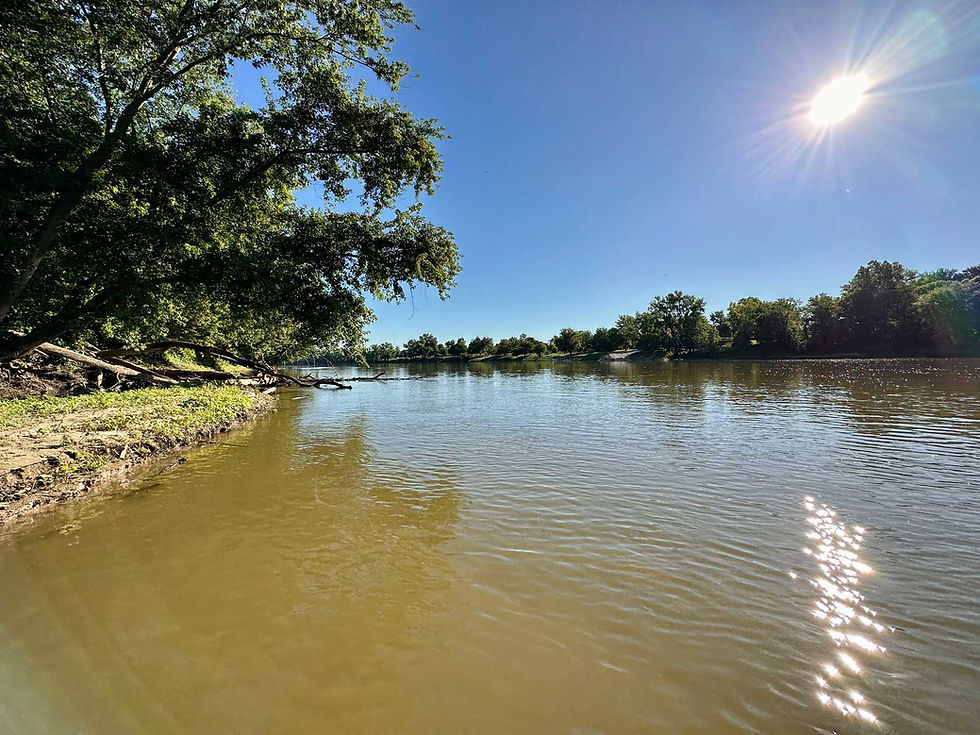
Just across the river lies one of Indiana’s most remarkable natural landscapes: the Wabashiki Wetlands.
More than 3,000 acres of wetlands, forests, and natural bodies of water create habitat for migratory birds, wildlife, and outdoor recreation.
These wetlands help protect water quality, reduce flooding, and sustain biodiversity across the region.
Together with trails, parks, and riverfront access points, they form a natural environment that makes the Wabash Valley unlike anywhere else in Indiana.
